Posts

A Memoir To Angelica

Image
A Memoir To Angelica August 14, 2022 (Angelica's gravesite.) It was so sudden. We don't know how it happened, but dear Buff Orpington Angelica is not with us anymore. She's joined Washington a better place now. On the morning of August 7, 2022, Angelica passed away on floor of the run. We found her later in the afternoon. There was no animal, no symptoms, no sign to tell us she was going to pass. She was so happy here, I wish I knew what killed her. The day before she died, I had one last chance to hold her and talk to her, and I'm so glad I did. I'll never forget that evening, especially because Angelica pooped on my shoes! Angelica was the sweetest hen to ever live. From the day we brought her home, she was the most happiest and had the most personality of the whole flock. She loved taking taking treats from our hands, always running over as soon as she heard us taking out the mealworm jar, and followed us around everywhere. Sometimes she was a bit harsh with he...

Choosing The Right Fencing For Your Coop

Image
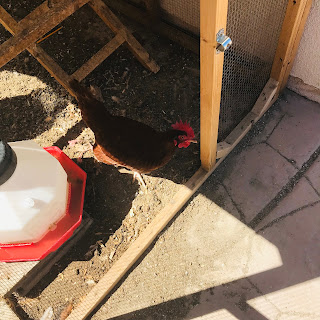
Choosing The Right Fencing For Your Coop August 7, 2022 (The hardware cloth fencing of our coop.) Keeping your flock safe from predators is something important to consider if you are new to chicken keeping, or building/buying a new coop, chicken tractor or run. Conversely, keeping your garden veggies safe from marauding chickens, and also bunnies, deer and wild birds is always a struggle.  The choices when it comes to fencing can be a bit confusing, and sadly making the wrong choice can mean the difference between a predator-proof chicken run versus one a raccoon can easily gain access to, or a chicken-proof garden versus a garden that's stripped clean by your flock!  Hopefully this will help clear up any confusion and assist you in choosing the right fencing for not only your chicken coop, but also your chicken run and your garden.  Chicken Wire Chicken wire isn't good for anything except keeping chickens in (or out, as the case may be). A dog, fox or raccoon can rip thr...

Weasels And Foxes And Hawks...Oh My!!!

Image
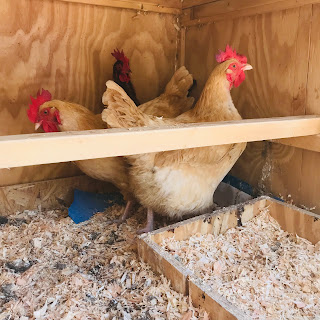
Weasels And Foxes And Hawks...Oh My!!! July 31, 2022 (The girls chillin' in the coop!) Not long after you start keeping chickens, every predator in the neighborhood will have your coop on their radar.  In fact, one of the hardest things about keeping chickens is keeping them safe from predators, but if you can figure out what you're faced with, it can make discouraging, trapping or otherwise dealing with them far easier. This is clearly not a topic that is pleasant to think - or read - about but as chicken keepers, our responsibility is to keep our chickens safe. No matter what.  They're so vulnerable and everything wants to eat chickens!  While most predators including raccoon, coyotes, and owls are mostly nocturnal, there are plenty of other predators out during the daylight hours including fox, dogs and hawks, so if your chickens free range, they are potentially at risk. The first line of defense is knowing what kind of predators you're potentially going to be deali...

Summer Streak!

Image
Summer Streak! July 24, 2022 (The girls' summer streak of eggs!) Ah yes...it's that time of year again!!! Noo, not Christmas silly! It's summertime!!!!!!!!!! And the girls have been loving every moment of it! So much so that they've been laying pretty much everyday. What a summer streak! You go, girls! Happy summer :)

From Coop To Kitchen

Image
From Coop To Kitchen July 17, 2022 (Me bringing eggs from the coop to the kitchen!) Face it: nobody wants dirty eggs. There's a greater chance of contamination from salmonella or E. coli when an egg has poop or even dirt on it. So keeping the eggs that your chickens lay clean is important for the health of your family. It's best not to wash fresh eggs until just before using them, so taking some simple steps to ensure the eggs are clean when you collect them is important. And here's why: The last step in a chicken's egg laying process involves the application of a thin, nearly invisible film on the surface of the eggshell called the "bloom". This bloom helps to keep air and bacteria from penetrating the eggshell, thereby ensuring the egg's freshness and edibility.  Washing the egg removes the bloom, so optimally you don't want to wash the eggs from your backyard flock unless absolutely necessary. Once an egg is washed, it has to be refrigerated, but un...

Egg Eating

Image
Egg Eating July 10, 2022 (Angelica greedily spying on her eggs!) The last thing you want is for your chickens to start eating their own eggs. That kind of defeats the purpose of raising chickens. Egg eating chickens are obviously not what you want in a backyard flock. It's a bad habit that gets harder to break the longer you let it go on. Many say that culling the offender(s) is the only way to stop it, but I believe that there are a few less drastic solutions. How Does Egg Eating Start? Many people blame feeding their chickens eggs or eggshells, either raw or cooked, for introducing their chickens to eating eggs.  But in reality, egg eating generally starts by accident. An egg gets stepped on or otherwise breaks in the nest, one curious hen pecks at it and thinks, " hmm this tastes good ". And now you've got an egg eating chickens. She will then start breaking eggs as soon as they are laid, and soon other hens will follow her lead and you'll have a whole flock la...

Herbs In The Nesting Boxes

Image
Herbs In The Nesting Boxes July 3, 2022 (Herbs sprinkled in the nesting box!) For the most part, herbs are really easy to grow, not picky about the soil conditions or even whether you water them regularly...and they add a delicious flavor to your cooking :) Well, there's another way to put the herbs and edible flowers you grow to good use - in your chicken nesting boxes and coop. Fresh or dried, most herbs have wonderful benefits for your flock ! What Herbs Can I Use? My coop and nesting boxes have never smelled so good until I started adding a mix of fresh-grown herbs and edible flowers that at different times of the year might include: basil bay leaves bee balm calendula catmint chamomile coneflower lavender lemon balm marigold mint oregano rose petals rosemary sage thyme violets yarrow Herbs For Broody Hens Broody hens particularly have a tendency to get mites and other bugs since they don't get out to dust bathe often, if at all, and the warm, dark space underneath them is...

Nesting Box Wars

Image
Nesting Box Wars June 26, 2022 (The hens pacing to see who gets the privilege of laying in the "coveted" nesting box!) Why, oh why, do they do it? Why will chickens literally sit on top of each other in the same nesting box - or stand just outside the box and cackle and carry on until the offending hen in the box is done - when there is a row of identical boxes completely empty and at their disposal? Why Nesting Box Wars Break Out Chickens prefer to lay their eggs in safe, private places that they feel are safe from predators. After all, in their eyes, every egg they lay is a potential baby chick to help propagate the breed. So, when they stroll past a nest and see an egg (or hen) in that nest, they think that since another hen felt it was a safe place, it must be a safe place for their egg.  A second school of thought is that in a flock, all the laying hens will lay their eggs in a communal nest in order to accumulate a 'clutch' which one of them will then sit on to ...

All About Nesting Boxes

Image
All About Nesting Boxes June 19, 2022 (One of the nesting boxes with some "gifts" from the girls!) Nesting boxes are where your chickens lay their eggs - or at least where they should lay their eggs! By providing enough boxes that are the right size, in the right location in your coop, filled with soft nesting material, you can encourage your chickens to use the boxes so your eggs will be clean and unbroken when you go to collect them. How Many Nesting Boxes Do I Need? Rule of thumb is that you should have one nesting box for every 3-4 hens, but realistically, all of your chickens will want to use just one or two boxes - even if all the boxes are nearly identical. Some call this the "Nesting Box Wars".  If you are fortunate, your chickens will act like ladies and patiently wait their turn to lay in the coveted box. How Big Do The Nesting Boxes Need To Be? Your nesting boxes should be at least 12" square - and closer to 14" square if you have larger breeds ...

All About Diatomaceous Earth

Image
All About Diatomaceous Earth June 12, 2022 (Hammy trying to sneak out of the run!) Here's the scoop. The answers to all your questions about diatomaceous earth. What Is Diatomaceous Earth? Diatomaceous earth, or DE, is a white, porous powder that is simply the crushed fossilized remains of diatoms (phytoplankton). Over time, these fossilized remains build up into large deposits that are then mined from bodies of water.  DE is used in many products because of its porous and abrasive nature. It’s used it when making gummy bears because it prevents them from sticking together. It's added to cereals to prevent caking. Along those same lines, it’s used in a cattle feed as an anti-caking agent. It’s also added to pesticides. You may have brushed your teeth with DE. Skin care products also use DE.  It’s a versatile product, so it’s worthwhile to do some research and see how it can benefit your chickens, home, garden, and family.  Why Are There Different Types Of Diatomaceous Ear...

HAPPY 2ND BIRTHDAY!!!

Image
HAPPY 2ND BIRTHDAY!!! June 5, 2022 (A collage of the flock's 2nd birthday!) It's that time of year again...!!! Happy birthday to you,  Happy birthday to you,  Happy birthday dear Lafayette, Hamilton, Angelica, & Eliza!!! Happy birthday to you June 1st, 2022 is the flock's 2nd birthday! And we held quite the celebration! I think they really enjoyed their yearly treat- a chicken birthday cake! Oh boy...I sure wish Laffy was here to celebrate with us...but I think he'll still be celebrating anyway, wherever he is! Happy 2nd  birthday dearies!!!

5 Tips To Keep Your Chickens Mite-Free

Image
5 Tips To Keep Your Chickens Mite-Free May 29, 2022 (Hammy staring soulfully into the camera :) I believe that I've figured out 5 ways to keeping your flock mite-free.  Naturally. 1. Dust Baths Providing your flock a dust bath year round is probably your best defense against not only mites, but lice, ticks, fleas and other biting parasites. A kiddie pool or small tub filled with dry dirt, sand, wood ash and dried herbs like lavender, rosemary, thyme and mint makes a wonderful dust bath.  If your chickens free range at least part of the day, they'll find their own spot to bathe in.  My girls seem to like taking their dust baths in the herb garden....coincidence? I think not. 2. Add Some Herbs In addition to adding some herbs in the dust bath area, sprinkling aromatic herbs in the nest boxes or hanging them in the coop is another good idea.  In general, insects, rodents and other pests don't enjoy the strong scent of herbs.  3. Dry The Coop Diatomaceous earth or ...

All About Coop Shavings

Image
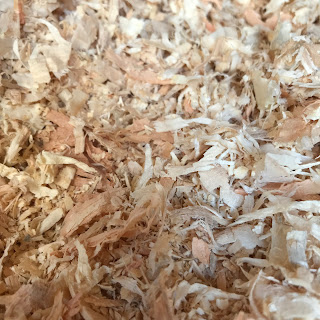
All About Coop Shavings May 22, 2022 (Shavings in the coop!) Do pine shavings make good chicken coop bedding? Pine shavings are commonly used for chicken coops as they’re more absorbent than most other materials, have insulating properties, are low in cost and widely available, and can be used for the deep litter method and composting. There are so many different types of wood shavings out there. Why is there so much attention on pine? Pine is typically preferred over other kinds of wood shavings because it’s: Cheaper More readily available Less dusty You also want to be sure that the shavings you’re buying haven’t been treated with any kind of chemicals, whether you’re buying pine or something else. Some treated woods may be toxic for chickens. One type of shavings you don’t want to use is cedar. Cedar contains plicatic acid, which can cause asthma and respiratory illness in your chickens.  You also don’t want to use sawdust, no matter what kind of wood it comes from. Whether it b...

The Pecking Order

Image
The Pecking Order  May 15, 2022 (Our little flock of hens...can you guess who is at the top of the pecking order???) Chickens take their pecking order very seriously. And I mean very seriously. As flock animals, they adhere to a very strict social hierarchy and establishing a pecking order actually helps to keep peace in a flock. Being high in the order equates to being "big man or woman on campus" and enjoying the top roost at night, first dibs on food and treats, the rooster's attention, and even the prime spot in the sun to take a dust bath. Chickens continually remind the others where they stand in the social order. The alpha hen at the top can peck at everyone, the hen just below her in the pecking order can assert her dominance on any flock member except the alpha hen, and so on down the line until you reach the bottom. The poor hen on the bottom often becomes everyone's footstool.  So while it's natural to feel badly for the hen who's lowest on the tote...

All About Roosting Bars

Image
All About Roosting Bars May 8, 2022 (Our roosting bar overhead the coop!) Roosting bars are where your chickens should perch to sleep at night inside their coop. A lot of chicken-keepers have questions all the time from building their own coops wondering exactly how the roosts should be built: how high, out of what material, how far apart...so here's all you need to know about roosting bars. Why Do I Need Roosts In The Coop? Chickens instinctively seek high ground when they sleep to keep them safer from ground predators. As you likely know, they take their pecking order very seriously and those highest in the pecking order will grab the highest perches, leaving the lower (and therefore more vulnerable) spots to those lower in the flock. Sleeping on the ground also leaves chickens more susceptible to pathogens and bacteria in the litter on the floor of the coop. It also makes them more apt to have issues with external parasites such as mites and lice who like the dark, warm, damp ar...

The Deep Litter Method

Image
The Deep Litter Method May 1, 2022 (Our deep litter in the chicken coop!) If you're not familiar with it, the deep litter method is a brilliant method to manage your coop litter through the year. It's easy, economical and results in beautifully composted chicken manure and bedding (whether it be straw, shavings, leaves, pine needles etc.) for your garden come spring. The deep litter method basically consists of repeatedly turning over the soiled bedding, adding a new layer, and allowing the chicken droppings to decompose on the floor of the coop all winter, at the same time creating heat to keep the coop warm naturally . As a further bonus, same as when you compost, beneficial microbes grow that actually help control pathogens, making your chickens less susceptible to diseases. The decompositional microbes produce Vitamins B12 and K, which the chickens take in as they find interesting things to eat in a mature litter. The experiments even demonstrated that biologically active l...